Blog

The Scotia Lapidary blog offers glimpses into the quiet art of stone cutting — where tradition meets intuition, and raw beauty is revealed through patience, skill, and soul.

The Eye cut

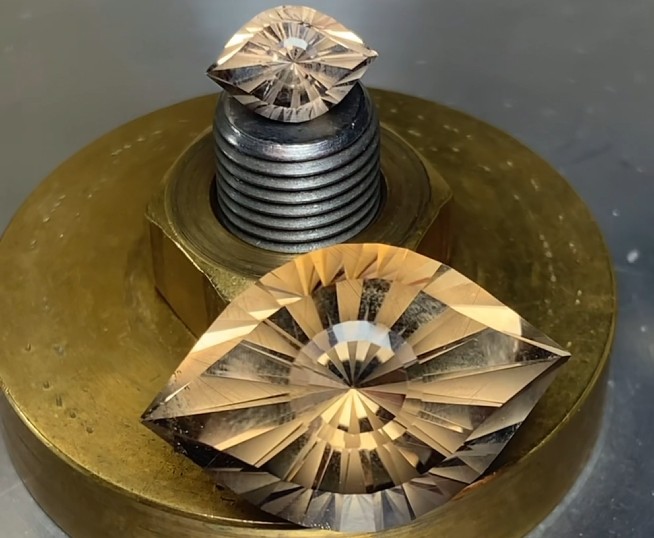
Dennis has a deep fascination with the “Eye” gemstone cut—a design originally created by the late Bob Kellor, who named it “Cleopatra’s Eye.” Dennis’s version is a refined adaptation of Kellor’s original, which has been tailored and changed for hand-faceting methods that rely more on visual intuition and tactile feedback than on machine-calibrated angles and gauges.
Hallmarking

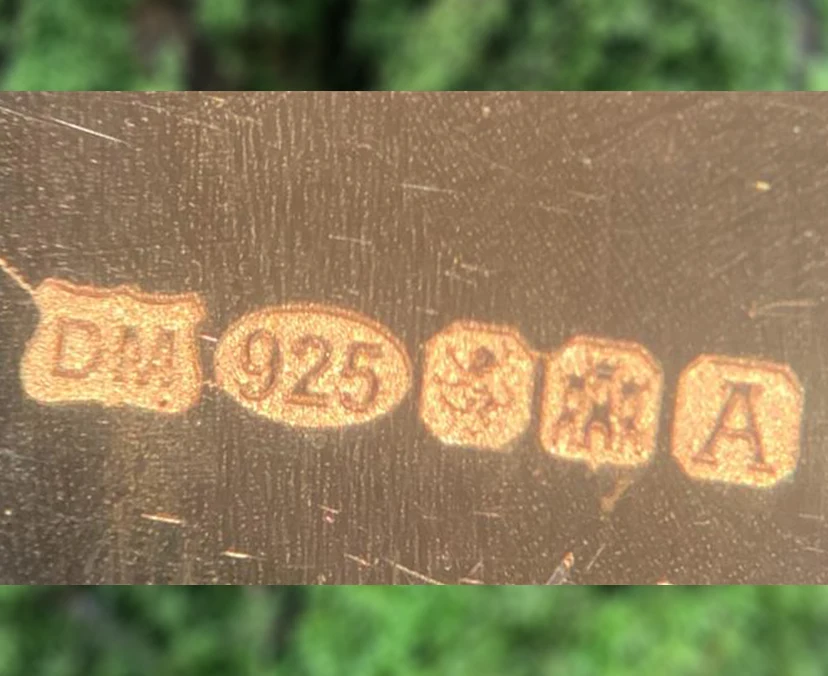
A hallmark applied by a UK Assay Office is not proof of origin or place of manufacture of an item. The hallmark of a UK Assay Office (whether applied by a UK Assay Office in its approved locations in or outside the UK) is proof that an item (in all its parts) is of the standard of fineness indicated by the hallmark struck on that item.

The Process in Gem Cutting

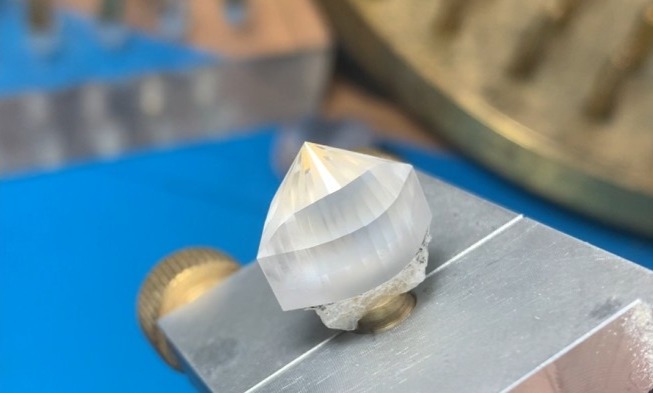
The process begins with selecting a suitable piece of faceting rough. The chosen rough is secured onto a brass dop using wax or CA adhesive. This dop is then inserted into a handpiece, which ensures precise control of the stone’s angle and position during the cutting and polishing phases. The lap is the flat, spinning disc placed on the faceting machine — is used in both the cutting and polishing stages.